Music Industry Report 2025: What Has Changed
Let’s dive into the music industry with the music industry report 2025. Navigating the music industry in 2025 requires an understanding that goes beyond vanity numbers and charts. It’s about recognizing the different types are audiences. Firstly it’s important to know the broad yet important distinction between music with followers and music with fandom. Artists like Cardi B, Drake and Ariana Grande, who can frequently top the charts and often seem to dominate streaming platforms, are emblematic of the “music with followers” category. You could call them influencer first. Their listenership is wide, and their online influence is undeniably huge. It’s important to remember that this doesn’t mean they don’t have a fan base? It simply means that they follow a base for outstrips their fan base. We’ll dive into fan bases later and the difference between fans and followers. Here’s where things start to get interesting and where you see the divergence between followers and fans. Think of artists like Coldplay, U2, BTS or Metallica. And then let’s use the example of Adele. Adele fans attend her concerts of course, but these fans are different to, let’s say, Iron Maiden fans. There’s a few ways to measure this, but possibly the most accurate way is through merchandise sales. Iron Maiden merchandise, sell by the bucket load. Adele merch, less so. When did you last see somebody in an Adele t-shirt? That’s not saying nobody buys Adele merchandise, but they buy it for a very different reason than Iron Maiden fans. The “music with fandom” category, represented by icons like BTS, Taylor Swift, and Guns’n Roses, Metallica, Avril Lavigne, thrives on a different kind of relationship. Their long-term success is down to pure fandom. It becomes a lifestyle. And their dedicated communities prove that. Their fans don’t just listen; they live the music, forming bonds that go beyond the moment, but through life. It’s crucial to understand that there’s a spectrum of engagement, with many artists enjoying both followers and dedicated fandom. The lines blur, and the music industry thrives on this complexity. But it’s also important to understand who benefits. This is where it gets complex. This report delves deep into the live music industry, emphasizing the differences between fandom and casual listenership. In an era where vanity metrics are valued higher than artistry, we aim to highlight the tangible, real-world impact of artists and the ways they connect with their audiences. We’ll explore the evolving landscape of live music in 2025, celebrating the core ways artists resonate with their listeners and fans.For a closer look at how this applies to artista, explore our wallet pass for creators
Artist or Influencer
this is where things start to get a little difficult. In the music world, things are not getting better. However, if you are an influencer, things are probably getting a lot better. Imagine if you’re a record label, one of the big three labels (Universal, Warner, or Sony). On average, you make around $2,000 per 1 million plays on streaming services like Spotify. On the other hand, there’s huge rewards available if they look at an artist as a brand and then look for sponsorship deals. This being the case, how does a big record label decide what type of artist to sign and promote?
The big question is: Are record labels in the business of music or in the business of influencer marketing and sponsorship? When you look at their success stories, it appears the latter. Of course, there’s room for both of these to exist at the same time, but there are also very big differences too. The recorded industry seems to be leaning further towards the influencer marketing angle than the music artist angle. The question is: Is music now secondary to who they sign?
How do artists navigate this new system?
With streaming platforms and major labels pushing incredibly high play counts and follower counts, and the press picking up on those numbers and interpreting them as success, there’s a real problem. Artistry seems to come second place at least when it comes to the mainstream and music press writing about what is successful. Of course, what’s interesting about this issue is the biggest tours are still from artists that don’t register on the follower count or play count, yet generate more revenue by far than influencer-first artists.
The root of the problem.
The root of the problem in music is there’s always more people that listen to music than music aficionados – the people that go to concerts, buy the merchandise, and even still collect CDs and vinyls. Almost everybody listens to music (more than 9 out of 10 people don’t have a favorite artist or two, they just generally like music). They also don’t go to concerts, of course this has never changed. There’s only ever been around 2-3% of the population that do go to concerts, buy merchandise and albums. And that goes back for decades. The big labels and the streaming platforms cater for the rest, the other 99% of people that listen to music. Those are the same people often that watch X Factor and America’s Got Talent. There are also the people who previously listened to radio for free and now pay streaming platforms to access all the music in the world in one place. Capturing this audience for at least streaming platforms and labels is more lucrative than looking for diverse, interesting, obscure fandom-driven bands and music artists.
What are music fans, and why do we describe them as super fans? When all they really are are just fans. The same fans that and visited record stores and made going to concerts part of their life. Of course things have changed now, so this isn’t looking back hoping for the old days. This is just defining where we are and how to move forward.
Superfans Want To Feel Closer To Their Favorite Artists
In a recent survey of 1,000 superfans of various music artists, a staggering 92% expressed a deep-seated desire to feel a more intimate connection with their favorite artist. Delving deeper, 78% stated that exclusive behind-the-scenes content made them feel more connected, while 85% believed that direct communication channels, such as fan Q&As or personalized messages, significantly bridged the gap between them and the artist.
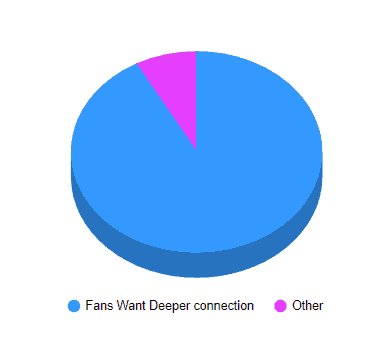
Furthermore, 73% felt that artists who regularly engage with their fan community, whether through fan club apps or social media, appeared more genuine and relatable. This data underscores the profound need for artists to foster closer ties with their most dedicated fans, as it not only strengthens their bond but also enhances the overall fan experience.
“Averaged across all artist sizes, super listeners make up 2% of an artist’s monthly listeners, but account for over 18% of monthly streams,” the report says. “It also confirms that superfans are stickier: they continue to listen to an artist’s music much longer after it is released: “two-thirds of super listeners will still be streaming your music after a six-month stretch.” – Music Ally
How Many Artists Do SuperFans Actually Listen To?
Platforms like Spotify and Apple Music offer listeners access to virtually “all the music in the world.” But when it comes to superfans, the dynamics are different. Superfans, by nature, have a deep-rooted connection to specific artists, often transcending the casual listening habits of the average music consumer.
According to a study by Music Ally, Spotify defines these dedicated listeners as “super listeners.” The data reveals that, on average, super listeners make up just 2% of an artist’s monthly listeners but account for a staggering 18% of monthly streams. This indicates that while they might be a small fraction of the total listener base, their engagement levels are significantly higher. Furthermore, these superfans continue to engage with an artist’s music long after its release. Two-thirds of super listeners will still be streaming an artist’s music even after six months of its release.

Monetizing Fandom
In the vast expanse of music listeners, a unique subset stands out: superfans. They’ve always been the backbone of the music industry. These dedicated individuals, though representing a small percentage of the total number of people that listen to music, hold the answer. In fact, they’re so important to new music and new artists that without them, it’s almost impossible to survive. This is nothing new; it’s always been the case. However, since the likes of Spotify and big music tech, new music has been put on the backburner in favor of back catalogue music, generating huge volumes of plays and money for their rights holders.
Fans crave attention from their artists as much as artists crave attention from fans. But there are fewer channels to have this deep connection. Historically, fan clubs played a pivotal role in fostering these deep connection. Fan clubs, often facilitated through print magazines, offered members exclusive perks such as early access to concert tickets and unique merchandise, strengthening the bond between artist and fan. Fans still want this connection.
Print magazines and physical newsletters gave way to the beginnings of social media like MySpace and of course later Facebook, Instagram and TikTok, to name a few. This seemed at the time to be a good thing, but it’s left an enormous hole in the industry of fandom.
For the business of making music, this has changed everything and not for the better. Big tech now owns the distribution channels and music for listeners is valued more than music for fans. Instead of measuring music’s impact from the fans that go to concerts. by merchandise and physical product, it’s now measured by “people who listen to music”. This is a very different metric, especially when you consider that only around 2-3% of the population fans. The rest are “radio listeners” – the majority of the population who simply listen to music, the ones who used to listen to the radio.
The issue with this is that major labels can’t revert back to serving fans. They’ve become the new radio, and with it, their market size is vastly increased to everybody that listens to music from people that used to buy music. This causes a big issue. Because of their position in the ecosystem of music, how can they redefine themselves and explain to their shareholders their market size is smaller by huge percentages without losing their value. The answer is they can’t. They’ll continue to benefit from their back catalogues while pretending to be interested in new music, which of course is a risky business.
The shift to app-based fan clubs, and wallet pass fan engagement, with notifications that don’t require an app, underscores the industry’s recognition of the Superfan’s value. By offering an immersive experience, artists can tap into the willingness of these fans to support them, not just through music purchases but by subscribing to platforms that bring them closer to the artists they love. In an era where genuine connection is often lost in the noise of streaming algorithms, these fan club apps are redefining and revitalizing the artist-fan relationship, proving that true fandom is not just about listening, it’s about belonging, participating, and supporting.
Mental Health and the Musician
Music artists grapple with the double-edged sword of social media. Platforms like Instagram, Twitter, and Facebook offer reach, but they also come with inherent challenges and costs. Instagram is now often seen by creators as a resource drain for example. The pressure to constantly grow followers, coupled with the demand for round-the-clock creativity, can be overwhelming, and it’s not what music artists are in the industry of music for. A telling 43% of creators experience social media burnout either monthly or quarterly, with factors like the fear of judgment, negative comments, and the so-called “authenticity tax” playing significant roles. Additionally, 80% of creators believe there’s a cost to being genuine online, with 22% fearing judgment, 20% dreading negative feedback, and 15% concerned about a loss of personal privacy.
80% of creators feel there's a cost to being authentic on social media
43% of creators experience social media burnout either monthly or quarterly.
39% of creators feel pressured to grow their following
Yet, amidst this challenging landscape, fan engagement platforms emerge as a beacon of hope. These platforms provide a dedicated space where artists can connect authentically with their most dedicated fans, the superfans. Here, the focus shifts from the relentless drive of algorithms to genuine human connection. Artists can share their journey, free from the pressures and negativity of mainstream platforms, ensuring a healthier digital environment that prioritizes their well-being and passion for music.
Challenges and Opportunities
The live music industry, while very much alive, is not without its challenges. For the smaller artist, ticket prices are stangent yet costs of putting on the show has increased significantly. With less include from recorded music and fear of being locked out of the system if they don’t upload all of the music to streaming platforms, there’s a growing need for alternatives. It’s not the streaming is bad, it’s a great medium for distribution. It’s streaming platforms who are geared to back catalog music from the major labels that are the issue. The narrative is that all new music needs to be on streaming platforms, but the truth is this is a narrative driven by the streaming platforms and the record labels. Without new music, streaming platforms become only places to listen to back catalogue music. New artists and new music are being dragged into a system that doesn’t work for them but works extremely well for major labels or back catalogues with zero costs to maintain.
1. Over-reliance on Concert Revenue: Challenge: With the increasing costs of touring and the unpredictability of ticket sales, relying solely on concert revenue can be a risky proposition for artists. Opportunity: Diversifying revenue streams is crucial. Fan club apps offer a consistent income through subscriptions. Fans are willing to pay for exclusive content, early access to tickets, and unique experiences. This not only provides a steady revenue stream but also deepens the bond between the artist and their superfans.
2. The Digital Streaming Dilemma: Challenge: While platforms like Spotify and Apple Music have democratized music access, they often offer minimal returns to artists, especially emerging ones. Opportunity: Windowing music releases or even sharing demos and exclusive tracks on fan club apps can be a game-changer. These platforms become a space where artists can share content that might not “fit” on mainstream platforms but is gold for superfans. It’s about quality over quantity, reaching those who truly value and support the artist’s work.
3. Merchandise Sales Stagnation: Challenge: Traditional merchandise sales can be hit or miss, and the logistics of it all, especially during tours, can be daunting. Opportunity: Fan club apps can serve as a direct-to-fan storefront. Exclusive merchandise drops, personalized items, or even experiences can be offered directly to the superfans, ensuring higher sales and more meaningful fan interactions.
4. The Social Media Conundrum: Challenge: While social media platforms offer reach, they come with algorithmic challenges, potential negative interactions, and can sometimes dilute the artist’s message. Opportunity: Superfan community apps provide a curated space for genuine interactions. Here, artists are shielded from the broad spectrum of social media, focusing instead on those who genuinely support and love their work. It’s a space of positivity, direct communication, and authentic fan engagement.
Music Industry Report 2025: What Comes Next
The music industry’s landscape has been undergoing a significant transformation. While platforms like Spotify and Instagram have been the dominant forces for the past decade, emphasizing vast reach and numbers, a more profound, more sustainable trend is emerging: the undeniable power and importance of Superfans. Here’s a deeper dive into our findings and the future of the music industry:
The Rise of the Superfan: Streaming platforms and social media have democratized music access, but prioritized quantity over quality. A vast number of streams or followers can look impressive, but it’s the depth of engagement that truly matters. Superfans, with their unwavering dedication, represent this depth. They don’t just passively listen; they actively invest, both emotionally and financially. As we have said, they’re the ones buying concert tickets, merchandise, and engaging with exclusive content. These are the fans. The ones that drive the business of making music. Their commitment isn’t casual listening. They’ve fuelled the growth of new artists that we so badly need if we’re going to be successful in the future at producing new music.
Quality Over Quantity: The industry’s future lies in recognizing the value of quality interactions over sheer numbers. A million streams might look good on paper, but a thousand dedicated fans willing to invest in an artist’s journey are invaluable. It’s about forging a community, not just accumulating an audience. This shift towards quality ensures sustainability, deeper connections, and a more consistent revenue stream.
Genre Perspectives on Superfans: Different music genres have varied relationships with superfans. K-pop, for instance, has harnessed the power of fan clubs and fan club apps to monumental success, fostering a deep bond between artists and fans. This model, while prevalent in the East, hasn’t been as widely adopted in the West, despite its evident success. However, it’s not a cultural or age-specific phenomenon. Country music in the USA, with its vast superfan base, stands testament to this. It’s not just legacy rock bands like “Iron Maiden” that have superfans; contemporary acts like BTS prove that Gen Z is as much into superfandom as older generations.
Recommendations:
| Action | Description |
|---|---|
| Focus on Superfans | Prioritize building and nurturing a dedicated fanbase. Engage with them through exclusive content, early access, and more personalized experiences. |
| Re-evaluate Platforms | While platforms like Spotify and Instagram are essential, consider platforms that allow deeper fan engagement and community building. |
| Understand Your Genre | Recognize the unique relationship each genre has with its superfans. Tailor your strategies accordingly. Streaming platforms don’t always need to be the first place fans can hear your music. Selling physical copies at concerts will always yield better results for indie artists. |
| Embrace Quality | Shift the focus from numbers to meaningful interactions. It’s about building lasting relationships, not fleeting engagements. Look after your fans, and they’ll look after you. |
| Stay Authentic | In an age of digital personas, authenticity stands out. Engage genuinely with fans, understand their needs, and offer them value. But always stay authentic. |
To conclude this music industry report 2025, the future of the music industry is not just in numbers but in depth. It’s in recognizing and valuing the superfans. As artists, managers, and labels navigate this landscape, understanding and embracing the power of the superfan will be the key to sustainable success. The over-reliance on streaming networks and streaming platforms has caused so many issues for newer artists and new music. Artists and management need to understand this and take action to not only benefit the artist but the overall ecosystem of new music. Remember, streaming is a brilliant medium, but streaming platforms are not, at least for new music.
How FanCircles Supports Music Artists
FanCircles is a pioneering platform dedicated to revolutionizing the artist-fan relationship. In an age where genuine engagement is paramount, FanCircles bridges the gap between artists and their dedicated communities, offering tools that foster intimate connections, monetization opportunities, and valuable first-party data insights. By placing fans at the heart of the experience, FanCircles ensur
FanCircles offers a wallet pass platform that delivers push notifications directly to your audience’s lock screen through Apple Wallet and Google Wallet. No app required. Your audience adds your branded pass with one tap, and you own the channel. It’s called PushPass and it’s making waves at the moment because it’s scalable for any size creator, music artist, or influencer, and it’s viral.
A 15-minute call. Your brand on your lock screen before it ends.